
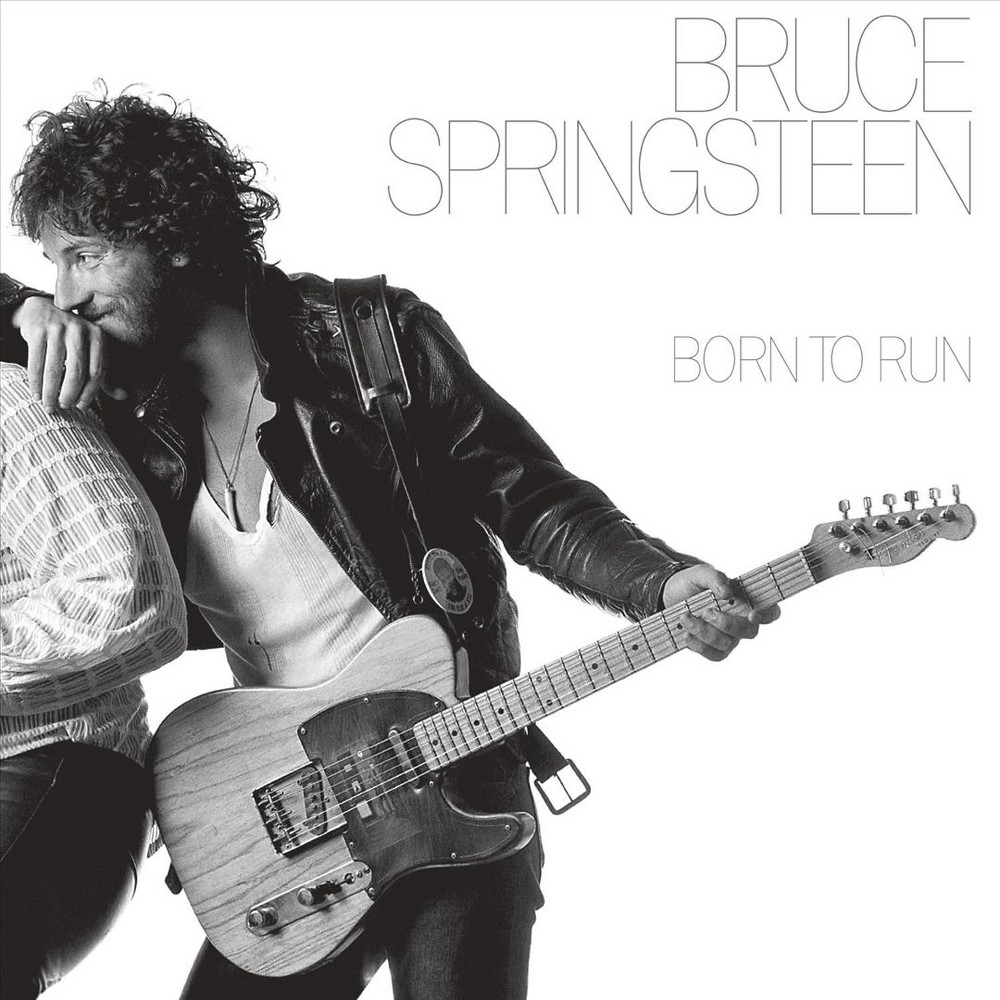
Born to Run, Bruce Springsteen’s third studio album, turns fifty this week. A half-century after the fact, most rock critics and historians consider it a monumental recording. At the time, though, it was a struggling musician’s Hail Mary.
By the end of 1973, the relatively obscure young guitarist-songwriter from the Jersey shore had reached his do-or-die moment. After two prior albums that scored well with critics but underperformed commercially, Columbia Records was getting ready to cut him loose. Album number three was Bruce Springsteen’s last chance.
After pushing the patience of his loyal E Street Band to its limits for eighteen agonizing months in the studio, he handed over the tapes – reluctantly, by all accounts – and Columbia released Born to Run on August 25, 1975. Five years later, most critics considered it one of the best rock albums of the 1970s. By the turn of the new century, it ranked highly on various lists of the greatest rock albums of all time, and despite blowback from some corners about Springsteen’s politics over the years, opinions of the album itself haven’t changed much since.
I didn’t get it at first. I was only eleven at the time. The raging adolescent hormones hadn’t quite kicked in yet, so I didn’t understand the passion, the desperation, the exhilaration, the longing or the triumph swirling inside the burning heart of this album. I was still a few years away from grasping any of that, or grasping any music that would dare to try and capture any of that.
But nobody in the music business needed the approval of a clueless eleven-year-old immersed in disposable pop songs like Captain & Tenille’s “Love Will Keep Us Together” and KC and the Sunshine Band’s “Get Down Tonight.” By the end of 1975, FM radio programmers in Cleveland – especially those at 30,000-watt powerhouse WMMS, a supporter of Springsteen from the very beginning – were playing the hell out of Born to Run, and kids in their late teens and twenties were eating it up.
It would have to sustain them for a while. Springsteen toured extensively to support the album, but a long-simmering friction with his manager escalated into a legal battle that prohibited him from recording any new material. There would be no new album until 1978.
Somewhere in the later part of that three-year dry spell was when it all started falling into place for me. I was veering away from top-40 AM radio and listening to more FM, where pretty much any track from Born to Run – not just the title track and “Tenth Avenue Freeze-Out,” both of which had been released as singles – enjoyed consistent airplay. I found myself stopping to listen, and listen very closely, whenever any of it came on.
One of the criticisms in those days was that Springsteen mumbled and wailed his way through his lyrics with a voice that was far less than polished, which wasn’t entirely inaccurate. But that was part of the allure. The more I listened, the more I heard life-or-death stories from a troubled narrator hell-bent on telling them. And when his picture appeared in print, he looked like Elvis Presley’s bushy-haired, denim-clad younger cousin from up north. Sleepy-eyed and sullen, possessed of a scraggly beard that barely covered his prominent chin, he was the cool-looking outcast with his trademark Fender Telecaster strapped across his shoulders like a dangerous weapon. There was a gravity about Springsteen’s music and his persona that I found increasingly hard to pull away from.
By the spring of 1978, the litigation was settled and Springsteen had found new and better management. The drought was over. In June, he released the long-awaited follow-up album, Darkness on the Edge of Town. That summer, I finally surrendered and bought a copy of Born to Run on vinyl, followed just a few weeks later by the new album. Had I been a kid of more comfortable means, I might have managed both in a single purchase. But this wasn’t music for comfortable kids. This was music for me – not quite fifteen years old, growing up in a financially and emotionally strained household in a working-class suburb of Cleveland and starting to wonder what was “out there.”
Born to Run offered me a glimpse, at least. There was so much to absorb in just eight tracks, especially when experienced in order from beginning to end – from the tentative but earnest invitation of “Thunder Road,” to the ragged desperation of the title track at the beginning of the second act, to the tragic midnight coda of “Jungleland.” And everything in between was just as mesmerizing and eye-opening. Years later, Springsteen explained that the entire album was essentially a “day in the life” that began with a morning encounter between a girl on a porch and a boy parked at the curb and ended in an operatic late-night melodrama. If this is so, I think of it as one of the most pivotal days in rock history.
Time marches relentlessly, and a lot happens in fifty years: the angst of adolescence; the minefield of young adulthood; the career treadmill; the commitment trifecta of marriage, mortgage and kids (none of which I would trade for anything, by the way); the compromises that come with middle age; and the struggle to reconcile the number of miles left on the road with the number of miles in the rearview mirror. Born to Run means something different now, but it still means plenty.
Back in the day, it was the map that helped me make sense of a time and place that was full of wide-open highways but devoid of any clear destinations. When I listen to it now, I’m reminded over and over again that following those highways isn’t a quest reserved for 24-year-old Jersey songwriters or socially awkward Rust Belt teenagers. It’s everyone’s quest, and for those who keep their minds and hearts open, it can last a lifetime.
I know it’s late. I can make it if I run.