
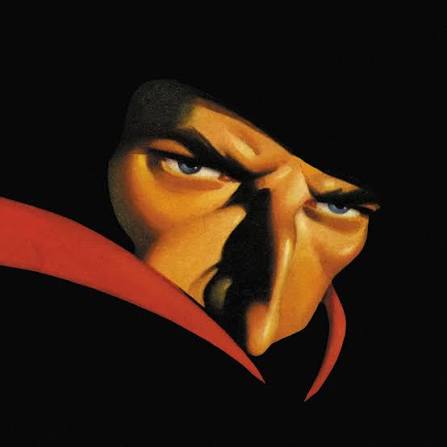
The Shadow, the star of his own pulp magazine and a popular radio drama during the 1930s and ‘40s, takes another incremental step closer to his 100th birthday this month. We can be fairly certain that he’s figured out in that stretch of time what evil lurks in the hearts of men, but the guy’s genesis is otherwise so convoluted that it’s hard to pinpoint exactly when and how he got started.
It’s a mysterious story, to be sure, but an interesting one nonetheless.
The first issue of The Shadow pulp magazine went on sale 95 years ago this month. The exact date is a little harder to pinpoint. The issue was dated April 1931, but it actually showed up on newsstands in early March, per the typical practice among magazine publishers in those days to post-date their publications as a way to maximize shelf life. We’ll say April for the sake of discussion.
It may have been the first time the world saw The Shadow or read about his exploits, but he had already been creeping into the public’s consciousness for several months via an entirely different medium, in connection with an entirely different publication. His origin story is an excellent example of cross-platform marketing – in a time before cross-platform marketing was even a thing – and it’s almost as unusual as the character himself.
In October 1915, New York-based Street & Smith Publications – already a well-established publisher of pulp magazines – launched a monthly crime fiction pulp called Detective Story Magazine. It was one of the first pulps devoted entirely to detective fiction, and it enjoyed a robust 34-year run until 1949. The magazine was so successful, in fact, that it appeared weekly for half of those 34 years.
Beginning in the summer of 1930, Street & Smith sponsored a radio program called Detective Story Hour, which featured readings of stories that appeared in the magazine. The narrator of the program was a mysterious crime-fighting figure known only as “The Shadow,” and the introduction to the program included a line that has since become one of the most famous in the history of old-time radio:
“Who knows what evil lurks in the hearts of men? The Shadow knows!”
Whoever this guy was, he became the most memorable part of the program after only a few months on the air. Listeners in search of the next issue of Detective Story Magazine went to their local newsstands and asked for “that Shadow magazine.” Street & Smith saw a train that was picking up speed, and they jumped on it.
The publisher enlisted the services of pulp writer and editor Walter Gibson – who had previously submitted stories to Detective Story Magazne – to develop the character for print. Writing under the Street & Smith house name of Maxwell Grant, Gibson wrote a 75,000-word story for the April 1931 first issue of The Shadow.
Gibson was the primary architect of the Shadow mythos, including the mysterious hypnotic powers; the city-wide network of operatives and aides; the archenemy Shiwan Khan; and the arsenal of weapons, disguises and devices used in his war against crime. Famous for his enormous annual output of words, Gibson wrote more than 280 of the 336 Shadow stories that ran in the magazine from 1931 until its final issue in 1949.
While the magazine began on a quarterly publication schedule, its immediate popularity prompted Street & Smith to boost it to a monthly frequency, and even twice-monthly for part of its 18-year run. Six months after the premiere issue went on sale, The Shadow became the title character of his own radio program.
Over the next several decades, The Shadow made the leap to other media: a series of feature-length films and a 15-chapter serial in the 1930s and ‘40s, a syndicated newspaper comic strip that ran from 1940 to 1942, and comic books produced by various publishers (Street & Smith, Archie Comics, DC, Dark Horse, and Dynamite).
Director Russell Mulcahey and screenwriter David Koepp brought The Shadow back to the big screen for the first time in nearly fifty years in a 1994 feature-length film starring Alec Baldwin in the title role and John Lone as Shiwan Khan. The movie underperformed at the box office and generally didn’t sit well with the critics. It does suffer from a few flaws, but it’s certainly not the worst interpretation of the character.
That distinction might be reserved for a recent series of thrillers written by James Patterson (co-authoring with Brian Sitts in the first two books and Richard DiLallo in the third and most recent). The series, which began in 2021, completely overhauls The Shadow and his supporting characters and sets them in the late 21st century. I haven’t read any of the installments, but the overwhelming consensus among Shadow fans who have is that Patterson takes the character so far afield of his origins that he’s virtually unrecognizable.
But detours and setbacks like that don’t stop The Shadow. Ninety-five years after his first appearance in his own magazine, the character has survived numerous interpretations and permutations by countless writers, actors, filmmakers, artists and creators. That’s an impressive demonstration of staying power by a guy who arrived on the pop culture landscape essentially due to a mistake in public perception.
To this day, I still don’t know what evil lurks in the hearts of men. I suspect most of us don’t, because most of us aren’t evil. But The Shadow? He’s been around long enough to have the inside story.
The Shadow knows.